
Microneedling rebuilds the dermis from within. A chemical peel resurfaces from the outside in. Each serves a distinct purpose, and neither approach is uniformly better. Weighing Microneedling vs Chemical Peel really comes down to how deep a concern lives in the skin and how much recovery time a schedule can absorb. For structural damage like atrophic acne scars, rolling indentations, and loss of dermal density, microneedling’s mechanical collagen induction reaches layers that surface chemistry cannot. For pigment irregularities, sun damage, and active acne, a carefully calibrated chemical peel addresses the epidermal and upper dermal changes driving those concerns. For those who want the biological depth of microneedling combined with the brightening of a peel, without needles, peeling, or social downtime, PRX Skin Revitalization offers a third path worth understanding before committing to either.
Understanding the Mechanisms: How Microneedling and Chemical Peels Work
How Microneedling Works
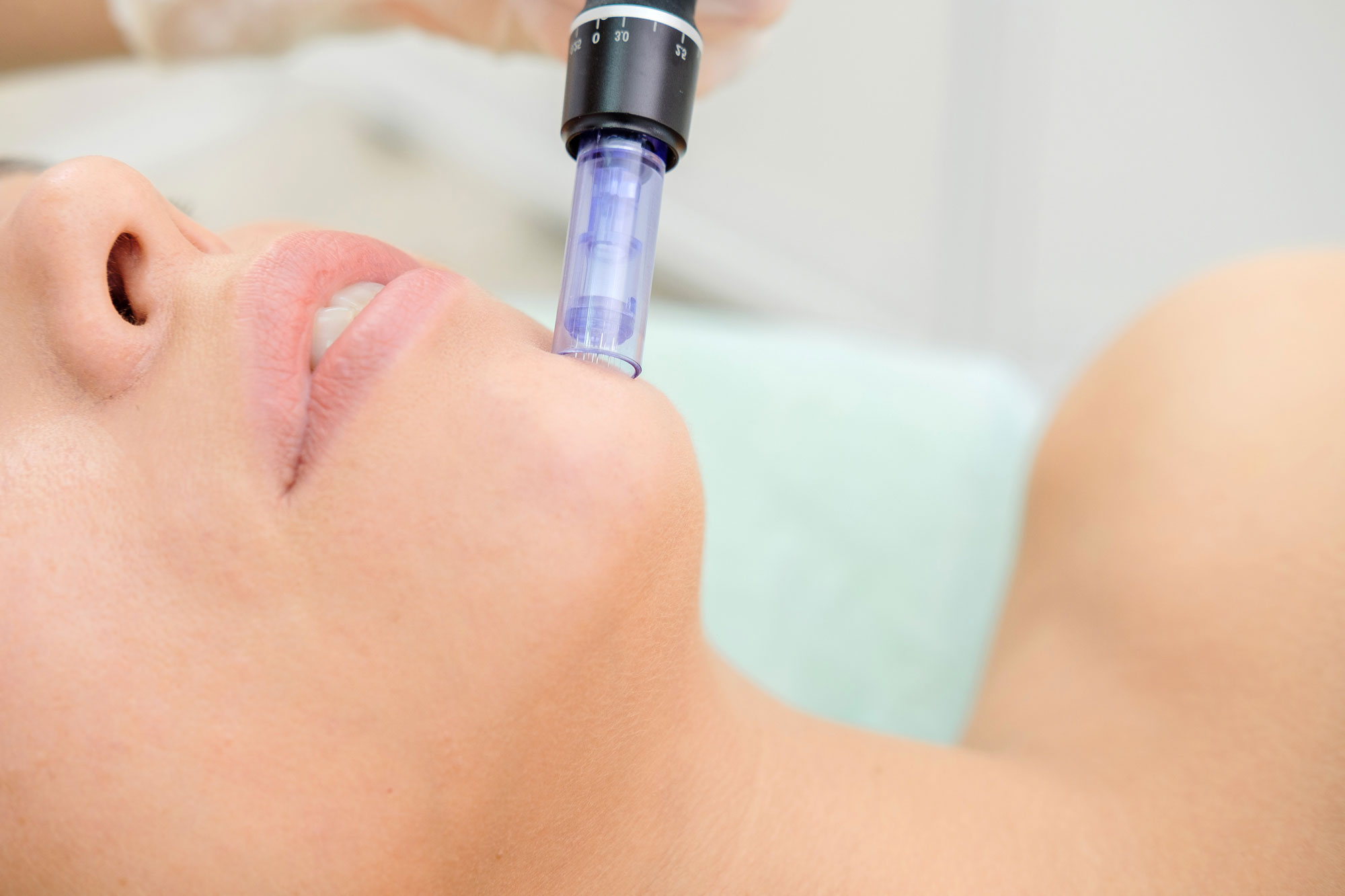
Microneedling, clinically termed collagen induction therapy, works by driving fine needles into the dermis to create controlled micro-injuries. Those injuries activate the wound healing cascade, releasing growth factors, recruiting fibroblasts, and accelerating the synthesis of new collagen and elastin. Crucially, the surrounding tissue remains intact, which is why recovery is measured in days rather than weeks. Research has documented up to a 400 percent increase in collagen and elastin deposition at six months post-treatment, a figure that reflects genuine dermal remodeling rather than surface level brightening.
How Chemical Peeling Works
Chemical peeling operates through an inherently different mechanism. An acidic solution applied to the skin surface induces controlled chemical injury that strips outer epidermal layers and, depending on the agent’s depth, reaches into the papillary dermis. That injury signal activates fibroblasts and prompts restructuring of the extracellular matrix, stimulating fresh collagen formation and accelerating cellular turnover. Superficial peels using glycolic or salicylic acid target the epidermis and suit surface pigmentation and mild texture irregularities. Medium depth agents like trichloroacetic acid penetrate the upper dermis, while deep phenol peels go further still, with recovery timelines scaling accordingly.
Microneedling vs Chemical Peel: Comparing Efficacy for Acne Scars, Aging, and Pigment
Atrophic acne scars, including ice pick, boxcar, and rolling variants, affect close to half of all acne patients, and research suggests atrophic scarring makes up the large majority of acne scarring presentations overall. They are also among the most psychologically distressing skin concerns in aesthetic medicine, which is why the efficacy gap between treatment modalities carries real clinical weight.
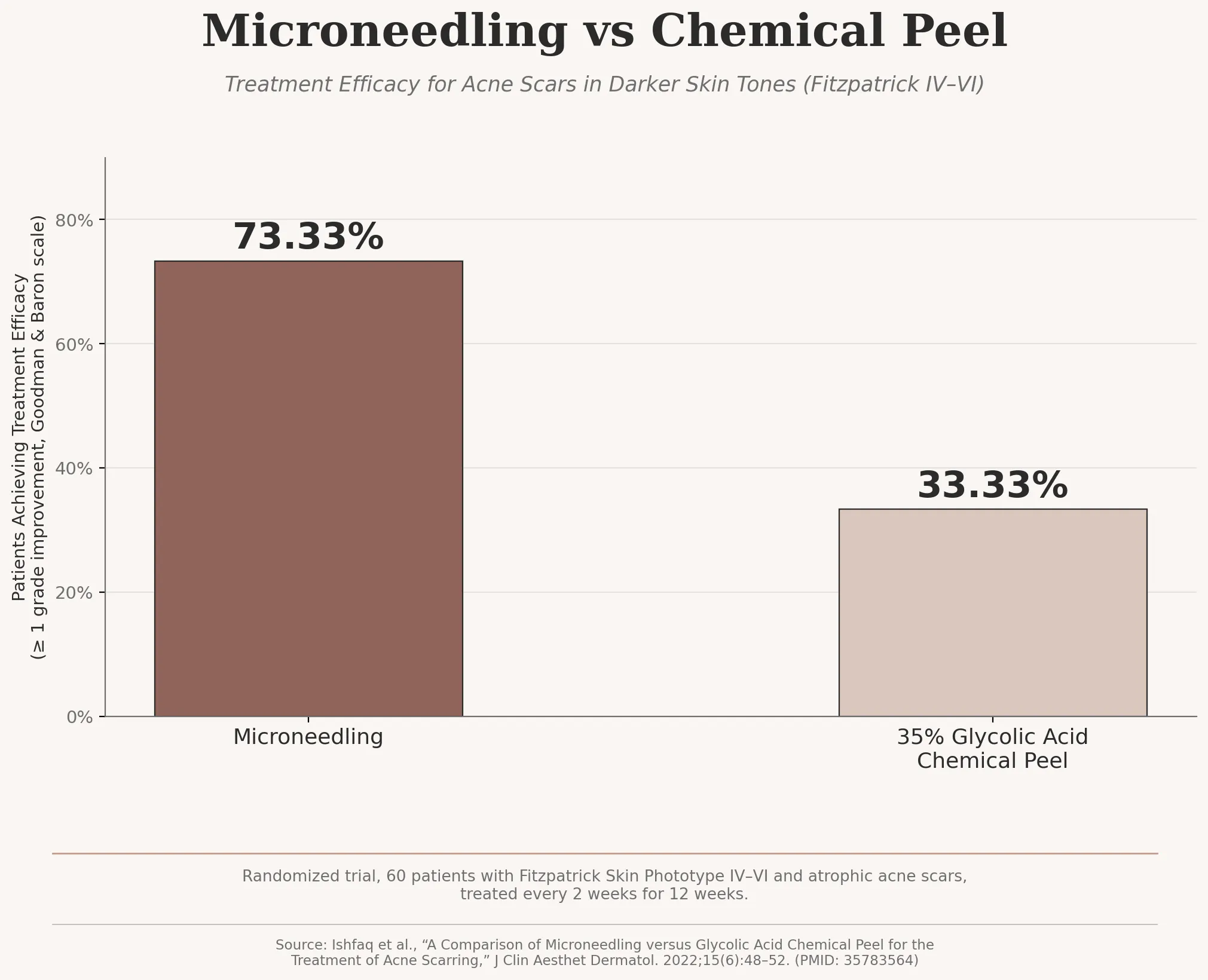
Source: Ishfaq et al., Journal of Clinical and Aesthetic Dermatology, 2022.
In a direct comparative trial, 73.33 percent of patients treated with microneedling achieved measurable treatment efficacy versus only 33.33 percent of patients treated with glycolic acid peels. That gap reflects a fundamental difference in mechanism: microneedling physically remodels the dermal architecture that creates the indentation, while a superficial peel refines the surface above it. Beyond scars, microneedling addresses fine lines, wrinkles, hyperpigmentation, melasma, stretch marks, and surgical scars, a clinical range that makes it one of the more versatile tools in aesthetic medicine.
- Microneedling advantages: Deeper dermal remodeling, a strong safety profile for Fitzpatrick skin types IV through VI due to substantially lower post-inflammatory hyperpigmentation risk compared to aggressive lasers, and superior structural correction for rolling and boxcar scar morphologies.
- Chemical peel advantages: Rapid epidermal exfoliation and high efficacy for superficial sun damage, melasma, and active acne when the acid is matched to the concern, such as salicylic acid for acne-prone skin or glycolic acid for texture and tone. Patients managing active breakouts alongside surface concerns may benefit from reviewing acne treatment options to address both layers of the problem at once.
Think of microneedling as shoring up the structural foundation of the skin, while a traditional chemical peel refines the surface above it. Both are necessary in different circumstances, and neither substitutes for the other.
Downtime, Recovery, and Safety Profiles
Microneedling vs Chemical Peel: Comparing the Recovery Experience
Microneedling’s recovery profile is one of its most practical advantages. Redness and mild swelling are the primary post-treatment responses, and both typically resolve within 48 to 72 hours, according to a comprehensive review of microneedling outcomes. There is no active peeling, no visible sheet shedding, and no period where the skin looks publicly compromised. For patients with Fitzpatrick types IV and V, this matters considerably, since the preserved epidermis means the post-inflammatory hyperpigmentation risk that accompanies more ablative modalities is substantially reduced.
Chemical peel recovery is far less predictable, and the range is wide. A superficial glycolic peel may produce mild dryness for a day or two. A deep phenol peel, by contrast, generates prolonged redness lasting three to four months and transient hyperpigmentation that can persist for up to six months. Introducing aggressive chemical peels in patients with darker skin tones requires careful patient selection and a disciplined sun protection routine, because the hyperpigmentation risk climbs meaningfully with peel depth.
- Microneedling sensation: Feels like a mild sunburn with skin tightness for one to two days, with no active surface peeling or visible shedding.
- Traditional peel sensation: Mild stinging during application, followed by active skin flaking, sheet peeling in some cases, and dryness beginning around day three and lasting up to a week for medium-depth peels.
“Dr. Dana Brownell is a brilliant artist and master of her trade in the newest, most state of the art technology in aesthetic non-surgical cosmetology. With an incredible eye, her understanding of what techniques are needed to obtain exceptional youthful results far surpasses any of the best of the best doctors.” – Kate B.
The Power of Synergy: Combining Microneedling and Chemical Peels
What the Research Shows About Combination Therapy
Choosing between microneedling and a chemical peel is sometimes a false dilemma. A 2025 systematic review and meta-analysis pooling nine studies and 566 patients found that combining microneedling with chemical peeling significantly outperforms either treatment as a standalone intervention.
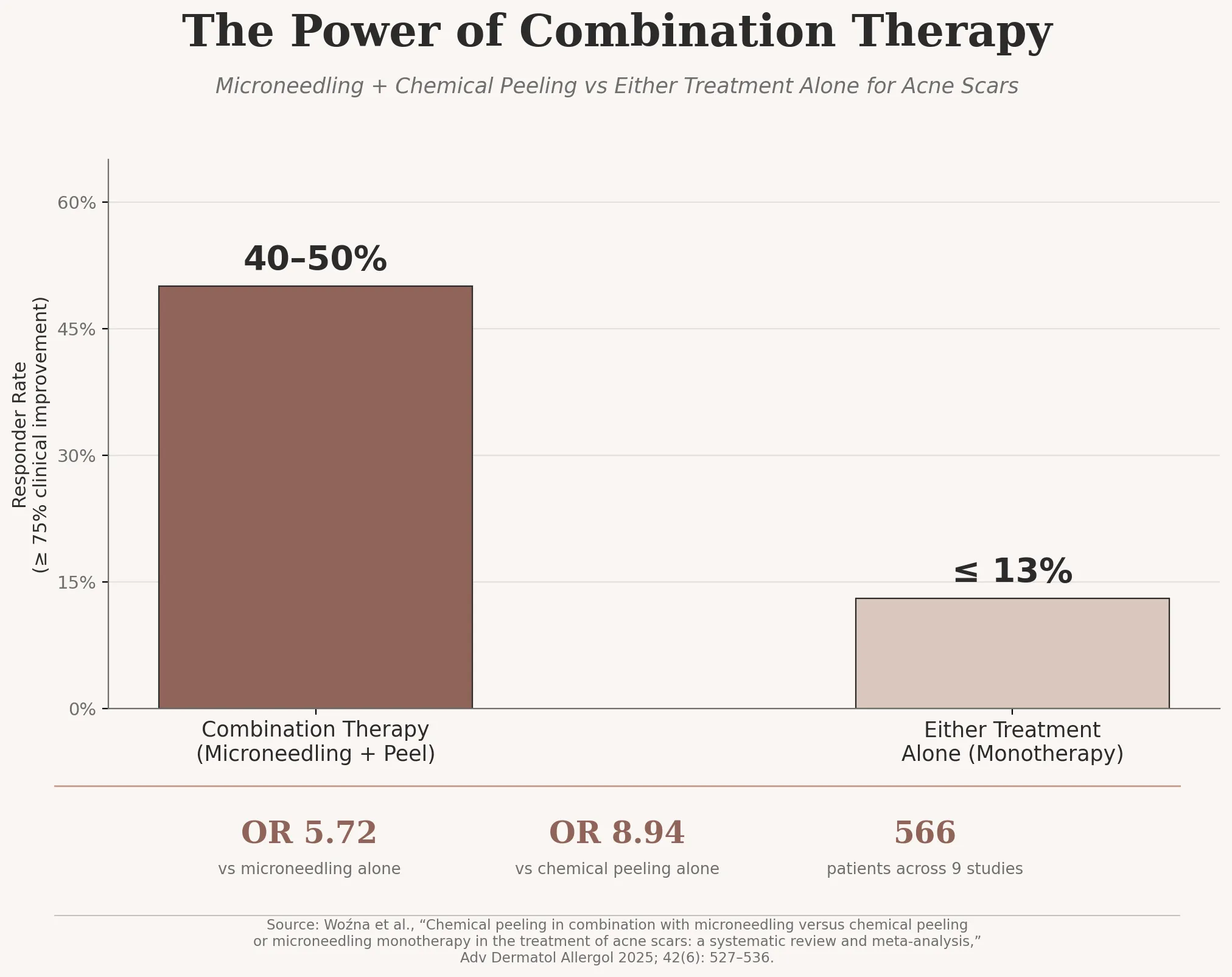
Source: Woźna et al., Advances in Dermatology and Allergology, 2025.
The odds ratios are notable: combination therapy outperformed microneedling alone with an odds ratio of 5.72, and outperformed chemical peeling alone with an odds ratio of 8.94 for acne scar improvement. Responder rates achieving 75 percent or greater clinical improvement reached 40 to 50 percent with combination therapy, compared to 13 percent or less with either treatment used alone. Patient-reported satisfaction and quality of life scores also favored the combined protocols across the pooled studies.
The biological mechanism behind this collaborative effect is fairly intuitive. Microneedling creates microchannels that allow a peeling agent to penetrate more uniformly and deeply, amplifying the dermal remodeling response rather than simply layering two separate treatments. For patients drawn to this combined approach, PRX Skin Revitalization captures much of this collaborative benefit in a single protocol, without separate sessions or extended recovery. Its formula combines trichloroacetic acid, hydrogen peroxide, and kojic acid to stimulate deep dermal collagen without triggering the surface peeling or social downtime of a traditional peel.
Choosing the Right Treatment for Your Skin and Lifestyle
- Choose microneedling if the primary concern is structural, such as deep boxcar or rolling acne scars, fine lines, or skin laxity, and a mechanical approach without active surface peeling or flaking is preferred.
- Choose a traditional chemical peel if the concerns are predominantly superficial, such as melasma, sun spots, active acne, or uneven skin tone, and a few days of active skin shedding can be accommodated.
- Choose PRX Skin Revitalization if the goal is the deep dermal remodeling of microneedling and the brightening effect of a peel, with zero peeling, no needles, and no social downtime.
Collagen remodeling is a gradual biological process, and managing that expectation honestly is part of sound clinical practice. Initial brightness often appears within days of treatment, but the structural improvements, including denser collagen, smoother scar topography, and refined skin texture, continue developing over weeks and months. There is also no standardized consensus on optimal sequencing or session intervals, which currently range from two to six weeks depending on the protocol and the clinician’s judgment. A personalized assessment by a board-certified physician remains the most reliable way to evaluate skin tolerance, Fitzpatrick type, and lifestyle constraints before committing to a plan. Dr. Dana Brownell’s background in aesthetic medicine shapes that kind of individualized evaluation for every treatment plan.
Frequently Asked Questions About Microneedling and Chemical Peels
Is 40 too old for microneedling?
No. Forty is one of the more productive ages to begin or continue microneedling. Natural collagen production slows in the mid-thirties, meaning the structural support beneath the skin gradually weakens over time, much like a mattress losing its inner springs. Microneedling helps rebuild that support naturally, working with the body’s own healing biology to restore structure and soften fine lines.
Why does skin look older right after microneedling?
The temporary appearance of dryness, dullness, or exaggerated texture in the days following microneedling is a normal inflammatory response. Transient swelling and the early healing phase can make skin look more fatigued before it looks better. This phase typically resolves within 48 to 72 hours, after which the healing cascade reveals a smoother, more refined complexion.
Should microneedling or a chemical peel come first?
Sequencing depends entirely on skin goals and tolerance. A common clinical approach is to begin with a superficial chemical peel to clear dead surface cells, then follow with microneedling in a subsequent session to drive deeper dermal remodeling. No standardized consensus exists on sequencing, however, and the optimal interval between sessions remains an active area of clinical discussion. A professional consultation is the most reliable way to design a protocol that is genuinely safe for a specific skin type.
What is more effective than microneedling?
It depends on the concern. For deep structural wrinkles or significant skin laxity, fractional laser resurfacing may deliver more potent results in a single session. For those who want deep dermal remodeling and surface brightening without the discomfort of needles or the recovery of laser treatments, advanced biorevitalizers like PRX Skin Revitalization represent a refined modern alternative.
Which is better for aging skin, microneedling or a chemical peel?
Both treatments address aging, but through different layers. Microneedling is generally more effective for stimulating structural collagen to address deep texture, fine lines, and loss of firmness. Chemical peels tend to outperform for surface-level concerns such as sun damage, melasma, and uneven tone. Combining or alternating the two often yields the most complete results, particularly when a physician calibrates the protocol to individual anatomy and skin history.
Bringing It All Together
Achieving healthier, more refined skin rarely requires choosing between needles and chemical exfoliation. Understanding what each modality does, and where its strengths end, makes the decision considerably less daunting. Microneedling rebuilds dermal architecture, chemical peels resurface the layers above it, and modern biorevitalization options like PRX close the gap between the two without the recovery burden. Patients weighing deeper structural correction sometimes also look at Laser Genesis or fractional laser resurfacing as additional options within a broader range of advanced skin resurfacing treatments.
A thorough, individualized evaluation remains the most direct way to determine which structural or surface treatment fits a specific set of concerns, an approach woven into Westport MediSpa’s overall philosophy of care.